How to Build an Omnichannel Marketing Strategy That Converts
 By ANish Team
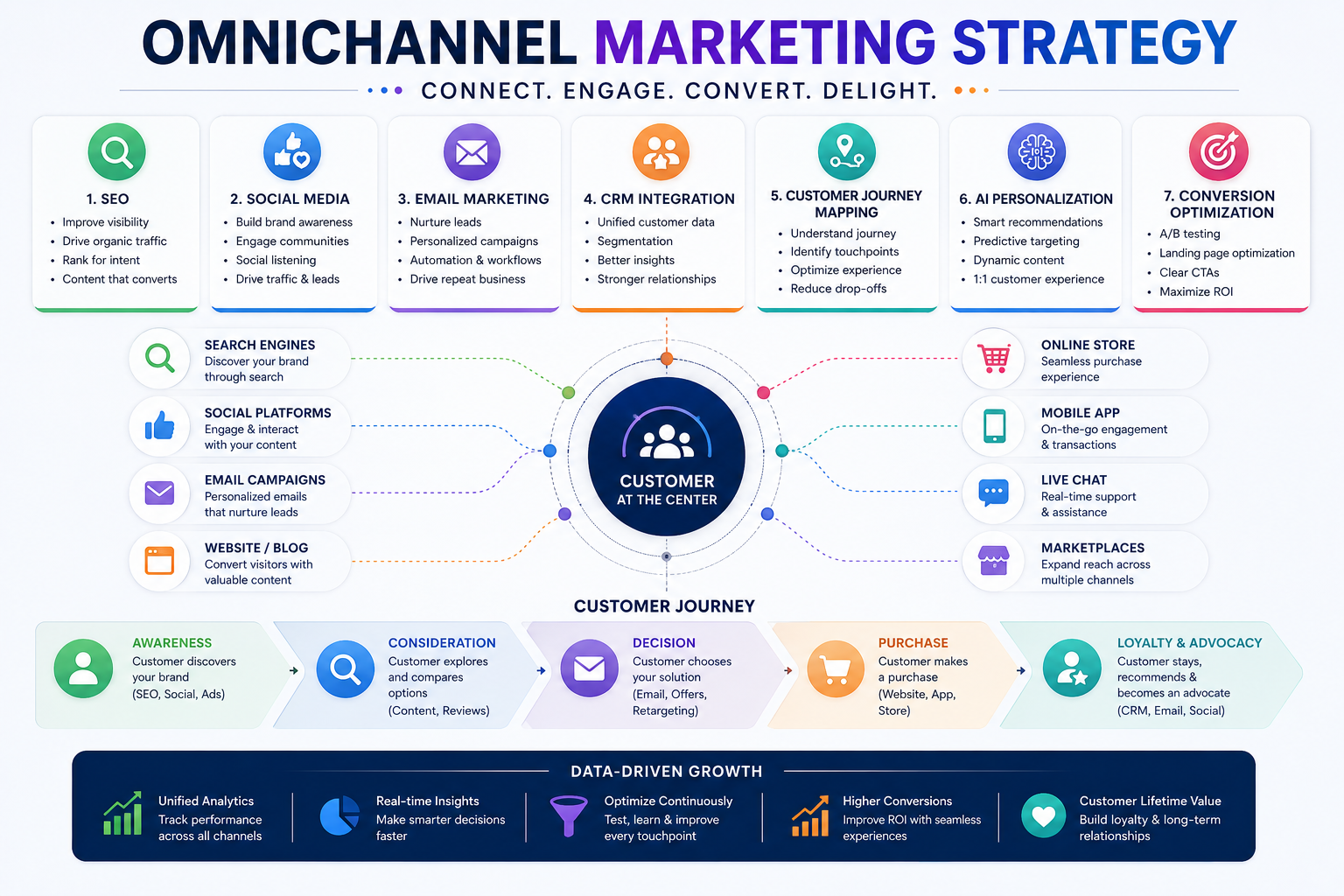
An omnichannel marketing strategy connects every customer touchpoint into a seamless experience across search, social media, email, websites, messaging apps, and offline interactions. Businesses that align their channels around customer behavior—not internal departments- typically see higher engagement, better customer retention, and stronger conversion rates.
Modern customers rarely buy after a single interaction. They may discover a brand through social media, research it on Google, subscribe to an email list, watch videos, and revisit the website multiple times before making a purchase. An effective omnichannel strategy ensures these interactions work together to guide prospects toward conversion.
What Is Omnichannel Marketing?
Omnichannel marketing is a customer-centric approach that creates a consistent and connected experience across all marketing channels.
Unlike multichannel marketing, where channels often operate independently, omnichannel marketing integrates them into a unified customer journey.
Common channels include:
- Website
- Search engines
- Email marketing
- Social media
- SMS marketing
- Mobile apps
- Customer support
- Paid advertising
- Offline touchpoints
The goal is to ensure customers receive a relevant and consistent experience regardless of where they interact with your brand.
Omnichannel Marketing vs Multichannel Marketing
Many businesses use multiple channels but fail to create a connected experience.
| Factor | Multichannel Marketing | Omnichannel Marketing |
|---|---|---|
| Customer Experience | Separate | Unified |
| Data Sharing | Limited | Integrated |
| Messaging | Channel-Specific | Consistent |
| Customer Journey | Fragmented | Connected |
| Personalization | Basic | Advanced |
| Conversion Potential | Moderate | Higher |
Omnichannel marketing focuses on the customer journey rather than individual marketing channels.
Why Omnichannel Marketing Matters in 2026
Consumers expect seamless experiences across devices and platforms.
Research consistently shows that customers interact with multiple touchpoints before making purchasing decisions.
An effective omnichannel strategy can improve:
- Customer experience
- Brand trust
- Lead generation
- Customer retention
- Marketing efficiency
- Revenue growth
As AI-powered search, social commerce, and personalized experiences continue evolving, disconnected marketing channels become increasingly ineffective.
Understanding the Modern Customer Journey
Successful omnichannel marketing begins with understanding how customers move through the buying process.
A typical customer journey might look like this:
Awareness
A prospect discovers your business through:
- Google Search
- Social media
- YouTube
- Referrals
- AI search tools
Consideration
They evaluate options by:
- Reading blog posts
- Watching videos
- Comparing competitors
- Reviewing testimonials
Decision
They take action through:
- Contact forms
- Free consultations
- Product purchases
- Demo requests
Retention
After conversion, engagement continues through:
- Email campaigns
- Customer support
- Loyalty programs
- Educational content
Mapping this journey helps identify opportunities to improve conversions.
Step 1: Build a Unified Customer Data Foundation
An omnichannel strategy depends on accurate customer data.
Businesses should connect data from multiple systems, including:
- Website analytics
- CRM platforms
- Email marketing tools
- Social media platforms
- Customer support systems
Relevant tools often include:
- Google Analytics
- HubSpot
- Salesforce
A unified data strategy allows businesses to better understand customer behavior and personalize communications.
Step 2: Create Consistent Messaging Across Channels
Consistency builds trust and reinforces brand recognition.
Customers should experience:
- Similar brand voice
- Consistent offers
- Aligned messaging
- Unified positioning
For example:
If a prospect clicks a LinkedIn ad promoting a free guide, the landing page, follow-up email, and retargeting campaign should reinforce the same message.
Consistency reduces friction and improves conversion rates.
Step 3: Use Content for Every Stage of the Funnel
Different customers require different information depending on where they are in the buying journey.
Top of Funnel Content
Designed to attract attention:
- Blog articles
- Social posts
- Educational videos
- Industry insights
Middle of Funnel Content
Designed to build trust:
- Case studies
- Webinars
- Comparison guides
- Email nurturing sequences
Bottom of Funnel Content
Designed to drive action:
- Product demos
- Consultations
- Testimonials
- Pricing pages
The most effective omnichannel strategies ensure content supports every stage of the journey.
Step 4: Leverage Personalization
Personalization improves engagement by delivering relevant experiences.
Examples include:
- Product recommendations
- Dynamic website content
- Segmented email campaigns
- Behavioral retargeting
- Personalized offers
Modern consumers increasingly expect brands to understand their preferences and needs.
The better the personalization, the stronger the potential conversion outcomes.
Step 5: Integrate Automation Without Losing Human Touch
Automation improves efficiency, but relationships still drive conversions.
Effective automation includes:
- Lead nurturing workflows
- Welcome email sequences
- Cart abandonment campaigns
- Appointment reminders
- Customer onboarding
However, businesses should maintain opportunities for direct human interaction when prospects require assistance.
The goal is to combine efficiency with trust.
AromaNish Insight
Across hundreds of lead generation and customer acquisition campaigns, one recurring challenge stands out: many businesses invest heavily in individual marketing channels but fail to connect them strategically.
For example, companies may generate website traffic through SEO, build audiences through social media, and run email campaigns separately.
The highest-performing campaigns typically connect these channels into a unified system where every interaction supports the next step in the customer journey.
This approach often produces stronger conversion rates and more predictable growth.
Real-World Example
In a recent campaign, a business generated traffic through SEO and paid advertising but experienced low conversion rates.
After implementing an omnichannel strategy that included:
- Content marketing
- Email automation
- CRM integration
- Retargeting campaigns
- Lead nurturing workflows
the company improved engagement across multiple touchpoints and increased conversion opportunities throughout the customer journey.
The improvement came not from adding more channels but from connecting existing channels more effectively.
Common Omnichannel Marketing Mistakes
Many businesses struggle with omnichannel execution due to avoidable mistakes.
Treating Channels as Separate Silos
Marketing channels should support one another rather than operate independently.
Inconsistent Messaging
Conflicting messages create confusion and reduce trust.
Ignoring Customer Data
Without customer insights, personalization becomes difficult.
Over-Automating
Excessive automation can make experiences feel impersonal.
Failing to Measure Performance
Businesses must track how channels work together, not just individual channel metrics.
Measuring Omnichannel Marketing Success
Success should be measured through business outcomes rather than channel-specific vanity metrics.
Key metrics include:
- Lead-to-customer conversion rate
- Customer acquisition cost
- Customer lifetime value
- Retention rate
- Revenue attribution
- Multi-touch conversion paths
Understanding how channels contribute collectively provides a more accurate picture of performance.
Soft Service Mention
Businesses looking to improve lead generation and conversion rates often benefit from integrating SEO, content marketing, social media, email marketing, and conversion optimization into a unified omnichannel strategy rather than treating them as separate initiatives.
How AI Is Transforming Omnichannel Marketing
AI is making omnichannel marketing more intelligent and responsive.
Businesses increasingly use AI for:
- Predictive analytics
- Customer segmentation
- Personalized recommendations
- Content optimization
- Marketing automation
- Conversational experiences
AI-powered platforms help marketers deliver more relevant experiences at scale while improving efficiency.
As AI adoption increases, customer expectations for personalized experiences will continue rising.
The Future of Omnichannel Marketing
The future of omnichannel marketing will be defined by:
- AI-powered personalization
- First-party data strategies
- Conversational commerce
- AI search visibility
- Cross-platform customer experiences
- Real-time customer insights
Businesses that prioritize seamless customer journeys will be better positioned to compete in increasingly crowded markets.
The focus will shift from channel management to experience management.
Conclusion
An omnichannel marketing strategy is no longer optional for businesses seeking sustainable growth.
Customers expect seamless experiences across every touchpoint, and businesses that connect their marketing channels effectively are more likely to generate leads, increase conversions, and build long-term customer relationships.
The most successful strategies focus on understanding customer behavior, aligning messaging, leveraging data, and creating consistent experiences throughout the buyer journey.
Want to create an omnichannel marketing strategy that turns more visitors into leads and customers?
AromaNish helps businesses align SEO, content marketing, social media, email automation, and conversion optimization into a unified growth system. Schedule a Free Strategy Call or request a Free Quote to discover opportunities for measurable growth. We provide transparent reporting, practical recommendations, and no long-term contracts.
Prefer a quick conversation? Reach out via WhatsApp or visit our Contact Page.
What To Read Next
The next question you’re likely asking:
- First-Party Data Strategies for Modern Businesses
- How AI Search Optimization Differs from Traditional SEO
- Digital Marketing Trends in 2026
Discussion Question
Which marketing channel currently generates the most leads for your business, and how effectively is it connected to the rest of your customer journey?
FAQ Section
What is an omnichannel marketing strategy?
An omnichannel marketing strategy creates a seamless customer experience across multiple channels, including websites, email, social media, search engines, messaging apps, and offline interactions.
How is omnichannel marketing different from multichannel marketing?
Multichannel marketing uses multiple channels independently, while omnichannel marketing integrates channels into one connected customer journey.
Why is omnichannel marketing important?
It improves customer experience, increases engagement, strengthens brand trust, and often leads to higher conversion rates.
What channels should be included in an omnichannel strategy?
Common channels include websites, SEO, social media, email marketing, SMS, WhatsApp, paid advertising, customer support, and mobile apps.
How do I measure omnichannel marketing success?
Track metrics such as conversion rates, customer acquisition cost, customer lifetime value, retention rates, and multi-touch attribution.
How does AI support omnichannel marketing?
AI helps with personalization, predictive analytics, customer segmentation, automation, recommendations, and real-time customer engagement.
